
Unified Analytics Catalog
Centralized Business Intelligence for Modern Enterprises
Analytics environments are growing more complex.
Adoption and trust are not.
Analytics environments are growing more complex.
Adoption and trust are not.
You keep your tools.
You gain clarity, visibility and control.
BI Hub: A Business-First Analytics Experience
Most organizations organize analytics by platform. Business users think in functions, teams and outcomes.
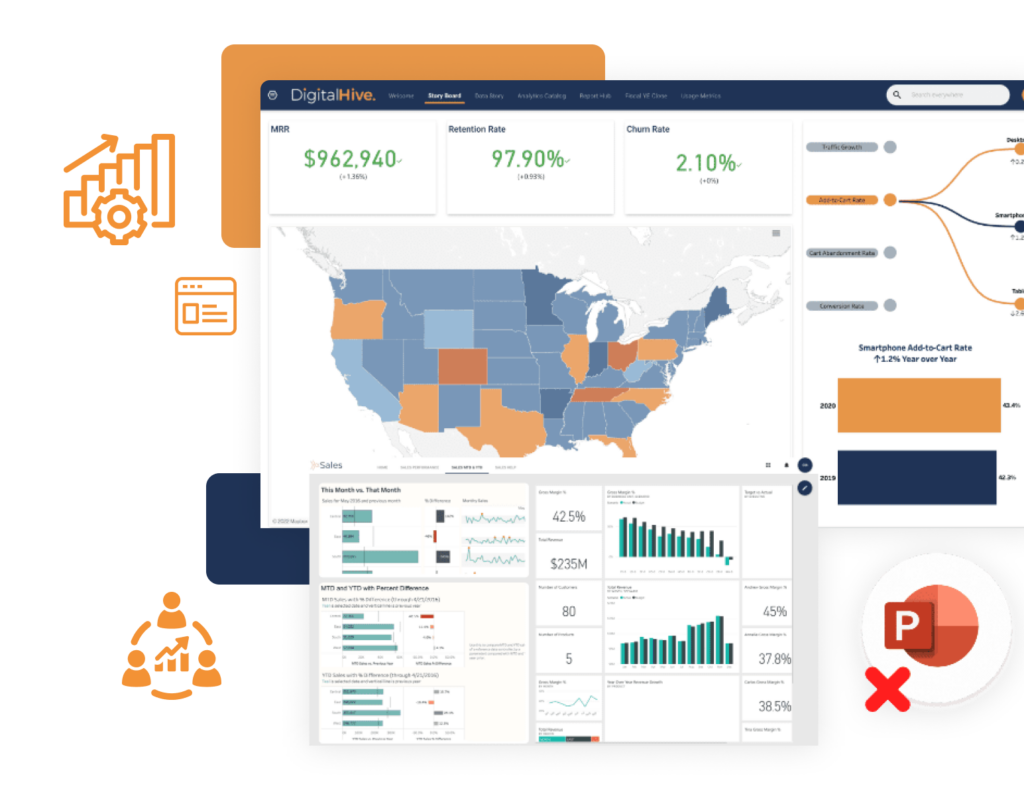
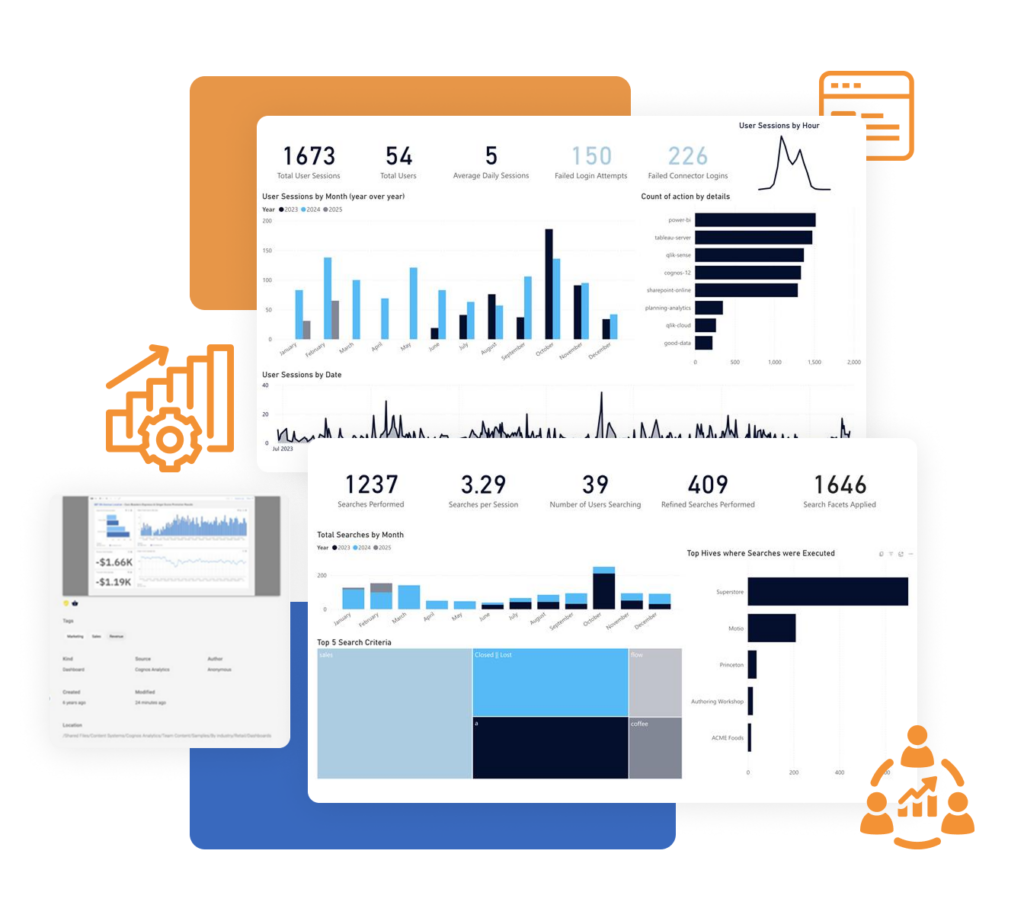
Digital Hive delivers analytics through a branded BI Hub that organizes content around how your business operates. Users do not need to know where a report was built. They simply find what they need, when they need it.
This is where the name Digital Hive comes from.
A hive is structured and role-based. Digital Hive allows you to create customized “Hives” for internal and external users, personalizing analytics around how they work and what they need to do their jobs.
Finance sees finance.
Sales sees sales.
Executives see what drives strategy.
Instead of overwhelming users with every dashboard in the system, Digital Hive presents analytics in context. That is what drives engagement and adoption.
Analytics Governance Without Friction
A unified analytics catalog strengthens analytics governance across your organization.
Digital Hive adds certification, ownership visibility, metadata management and lifecycle transparency across your BI platforms. Governance becomes embedded into the experience instead of layered on afterward.
- IT maintains control.
- Business users gain confidence.
- Leaders trust the numbers guiding decisions.
This is business intelligence governance designed for scale.
Centralized Business Intelligence Across Platforms
Digital Hive indexes and references analytics from tools such as Power BI, Tableau, Qlik, Looker, Excel and other enterprise reporting systems.
- Nothing is migrated.
- Nothing is rebuilt.
- Ownership remains in the native platform.
The result is a centralized business intelligence layer that reduces duplication, improves discoverability and increases adoption across the enterprise.
Organizations move from analytics sprawl to structured insight.
Outcomes
With Digital Hive, enterprises:
Improve report discoverability
Reduce duplicate dashboards
Strengthen analytics governance
Increase trust in metrics
Drive measurable analytics adoption
Digital Hive transforms analytics from scattered assets into a unified analytics ecosystem.
Frequently Asked Questions
A Unified Analytics Catalog is a centralized intelligence layer that organizes and indexes analytics assets across multiple BI platforms into one structured, searchable experience.
Instead of asking users to search through separate tools, folders, or email threads, a unified analytics catalog creates a single point of discovery. It connects dashboards, reports, definitions, and business context so users understand not just where analytics live, but what they mean and when to use them.
The impact is practical and measurable. Teams spend less time searching for reports, fewer duplicate dashboards are created, and confidence in metrics increases across the organization.
Digital Hive strengthens analytics governance by embedding structure directly into the BI experience.
Through certification workflows, ownership visibility, metadata tagging, and lifecycle transparency, organizations gain clarity around which analytics are trusted, current, and aligned to agreed definitions.
Governance becomes operational instead of theoretical. IT retains oversight, while business users gain confidence in the numbers guiding their decisions. This reduces conflicting metrics, limits redundant reporting, and strengthens overall business intelligence governance across the enterprise.
No. Digital Hive does not replace tools such as Power BI, Tableau, Qlik, or other enterprise reporting systems.
Instead, it serves as a unifying layer across them.
Reports remain in their native platforms, and teams continue building analytics as they do today. Digital Hive indexes and references that content to create a centralized business intelligence portal that improves discoverability, governance, and adoption without disruption.
There is no rip-and-replace initiative and no report rebuilding. Implementation focuses on structure, visibility, and usability.
A BI Hub is designed for organizations operating in multi-platform analytics environments that want to bring order to growing complexity.
It is especially valuable for CIOs, CDOs, BI leaders, data governance teams, and business units struggling to find trusted reports. Any organization experiencing dashboard sprawl, inconsistent definitions, or low adoption will benefit from a centralized business intelligence approach.
If your analytics ecosystem has expanded faster than your governance model, a BI Hub provides the framework needed to restore alignment and accelerate adoption.
Analytics adoption increases when discovery is simple, trust is visible, and content is relevant.
Digital Hive organizes analytics around business roles, outcomes, and responsibilities rather than technical platforms. Users are guided to certified dashboards aligned to their needs instead of navigating an overwhelming list of reports.
When teams consistently find trusted analytics quickly, usage increases. Increased usage leads to better decisions, stronger cross-team alignment, and greater return on your analytics investment.